 Protein Networks
- Protein Networks
- Hemp protein powder or hemp seeds: how processing changes the comparison
An essay
Hemp protein powder or hemp seeds: how processing changes the comparison
Hull removal, oil pressing and further separation change hemp ingredients in different ways. Learn how these steps affect protein, fat and fibre, and how to read comparisons between seeds and powders.
The journal's automated checks of this essay's content and sources passed on , and this version appeared after they did. Read the health disclaimer.
In this essay
The difference starts with what processing removes
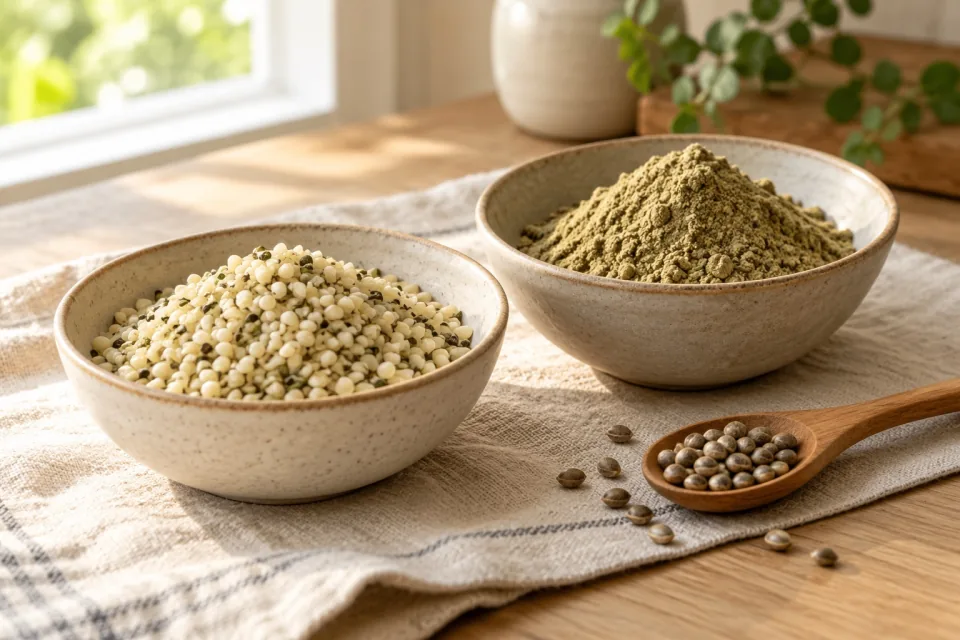
Hemp seeds and hemp protein powder differ according to which parts of the seed remain after processing. Removing the outer hull changes the composition differently from pressing out oil. Further protein separation creates another distinction, so the word powder alone gives an incomplete description of the food.
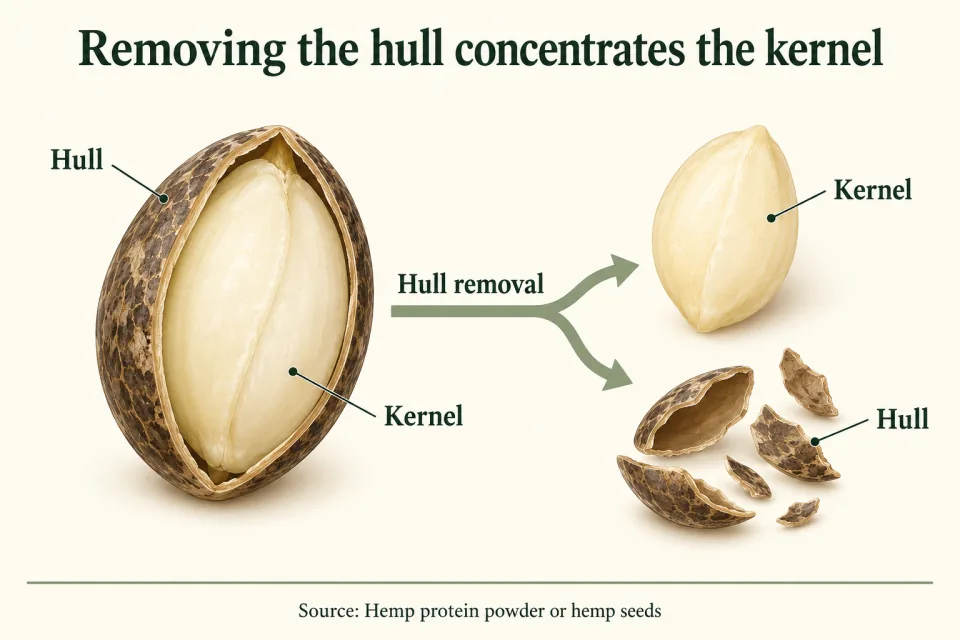
The useful starting point is the seed itself. Whole hemp seeds include an outer hull around the kernel. Dehulling removes that covering, leaving the kernel. The study in Frontiers in Nutrition places most of the seed’s protein and fat in the kernel, which helps explain why removing the hull changes their concentrations together.
Oil pressing follows a different route. The processing paper hosted by Aarhus University describes pressing hempseed to separate oil from the remaining solid material. That solid material is called cake or meal. The paper then documents milling and sieving after oil removal, as well as routes that use water to separate protein further.
These names describe different stages. A hulled seed has lost its outer covering; a pressed meal has lost some oil. A milled powder describes a ground material, while a further-extracted protein has also passed through additional separation. When a comparison groups all these forms together as hemp, it hides the processing differences needed to interpret their composition.
A useful way to read a seed-and-powder comparison is to follow what was removed. Start with the hull, then examine oil removal, then look for any later separation of protein from other material. This sequence connects the ingredient’s description to the composition findings. It also keeps a simple change in physical form, such as milling, separate from a process that removes part of the seed.
Removing the hull concentrates the kernel
Hull removal increased protein and fat concentrations together in the hemp seeds examined in Frontiers in Nutrition. The dehulled samples also had lower fibre measurements than the whole seeds. This makes dehulling a different kind of change from extracting oil.
The location of the seed’s components explains the direction of the comparison. The researchers report that carbohydrates are concentrated mainly in the seed coat. Protein and fat are concentrated mainly in the kernel. Removing the coat therefore changes the balance between the material on the outside and the material retained inside.
Here, concentration means the proportion of a sample accounted for by a component. A higher protein concentration does not mean that removing a hull created protein. It means that protein accounts for a larger share of the remaining material. In this comparison, fat also accounts for a larger share, so an increase in protein does not imply a decrease in fat.
The fibre findings need their own careful wording. The authors measured crude fibre, neutral detergent fibre and acid detergent fibre, which are distinct fibre measurements. Each was lower in the dehulled seeds than in the whole seeds. These labels identify the measurements used in the paper; they should remain attached to the findings rather than being replaced with a general dietary fibre label.
For a practical reading example, consider a comparison between whole seeds and hulled kernels. The first question is whether it describes the same starting material with the hull removed. If it does, the Frontiers findings provide a clear explanation for the pattern of higher protein and fat concentrations alongside lower fibre measurements. That pattern should not be carried over automatically to a comparison between kernels and pressed powder, because pressing removes a different component.
The distinction also changes how to interpret the phrase more concentrated. Hulled seeds concentrate the kernel’s components together. Describing them only as more concentrated in protein leaves out the accompanying fat finding and the reduction in the fibre measurements.
Pressing removes oil but leaves some behind
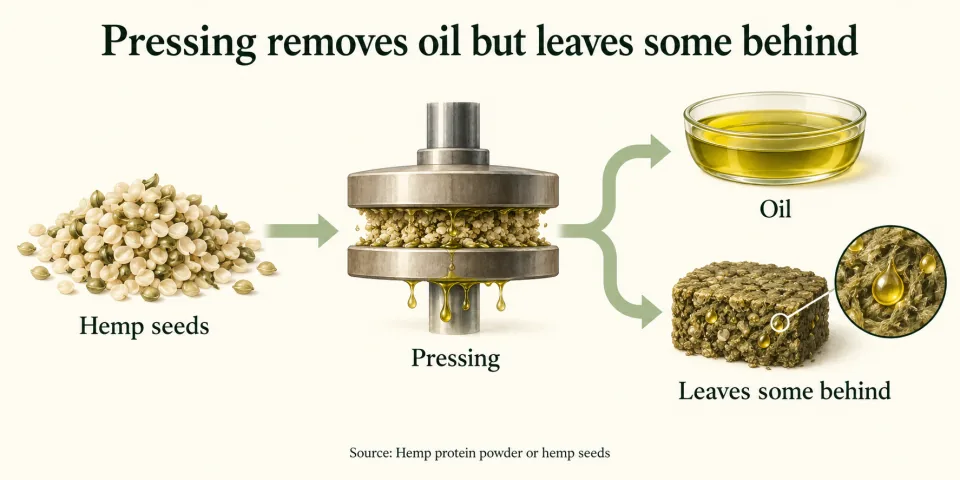
Oil pressing separates hempseed oil from a solid cake or meal, and the remaining material can undergo further processing. The industrial processing paper describes screw pressing as part of this separation. It also documents additional pressing to remove more oil from the residue.
This is a different operation from taking off the hull. Hull removal separates the outer covering from the kernel, whereas pressing separates oil from solid material. To understand a powder made after pressing, the relevant history includes how oil was removed as well as what happened to the hull. Calling the ingredient ground seeds does not explain that history.
Removing oil changes the relative amounts of the components that remain. Protein concentration describes protein as a share of the remaining material, so the amount of other material matters to that comparison. The same reasoning explains why the composition of pressed meal cannot be read directly from the composition of an intact seed. The food being measured has changed through separation.
The paper’s dry processing routes continued with milling and dry sieving after oil removal. Milling reduces the material to smaller particles, while sieving is a subsequent separation step. A description that mentions only milling leaves out the earlier pressing and any later sieving. Following the sequence gives a more useful account of the powder than its final appearance alone.
Oil removal was not complete in the concentrates examined. Every concentrate in the industrial processing study still contained measurable oil. A pressed or extracted hemp ingredient should therefore not be described as containing no fat merely because oil was separated during its preparation.
This finding helps distinguish a process description from a composition statement. Oil has been removed describes something that happened to the material. No oil remains would describe the final material, and the study does not support that description for its samples. For a comparison between seeds and powder, the relevant endpoint is the composition after the full processing sequence, including any oil retained.
Further separation changes protein and fibre together
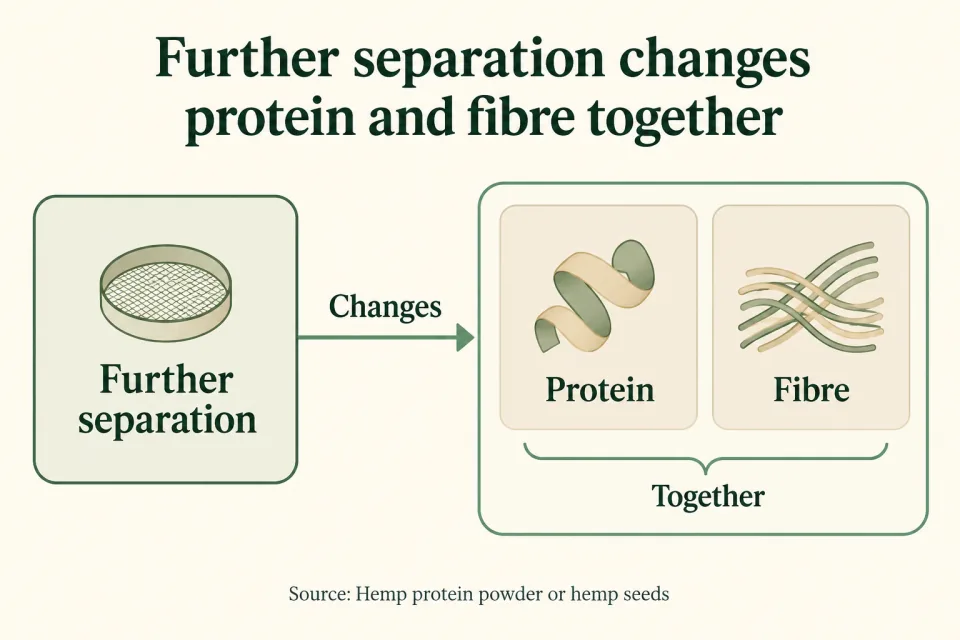
Further extraction can separate hemp protein from more of the accompanying material, including fibre. In the industrial processing study, repeated wet extraction and precipitation yielded the sample with the highest protein concentration and lowest carbohydrate concentration. That sample also contained less total dietary fibre than the dry-fractionated samples.
Fractionation means separating a material into portions with different compositions. The dry routes in the paper used milling and sieving after oil removal. The wet routes included aqueous extraction, meaning extraction using water, followed by protein precipitation and spray drying. Precipitation separates protein out of the liquid, and drying creates the final dry material.
The processing sequence matters because the wet-extracted sample was not simply the dry sample ground more finely. It had passed through additional separations. The lower total dietary fibre finding belongs to that repeatedly extracted sample and its comparison with the dry-fractionated samples. It does not establish that every hemp powder made using water has the same composition.
Another study hosted by Aarhus University makes that limit clearer. Its aqueous extraction recovered oil and protein together in less-refined concentrates. Using water therefore did not necessarily mean separating protein completely from oil. The outcome depended on what the process recovered together and what it separated into other fractions.
That study also examined pH, the measure of how acidic or alkaline the extraction liquid was. The starting pH affected hemp protein recovery but did not determine protein purity. Recovery concerns how much of the starting protein is collected; purity concerns how much of the collected material is protein. A process can therefore be described along these different dimensions without using them interchangeably.
The researchers also found that extraction pH changed how hemp proteins and oil bodies assembled in the liquid fractions. This adds detail to the phrase water extraction: the liquid conditions were part of the process being examined. Naming the liquid alone does not explain what stayed together in the recovered material.
A separate study from the University of Copenhagen divided hempseed material into meal, an oil-body-rich cream, serum and a protein-rich pellet through water-only fractionation. Its result offers a concrete picture of separation into distinct fractions. The protein-rich portion was an endpoint of that particular route, alongside other recovered material. Read together, these studies explain why the processing method needs to accompany any comparison of hemp concentrates.
Compare matching food forms and measurement methods
A useful composition comparison matches the food form, the measurement basis and the fibre method. The Frontiers seed study reports composition on a dry-matter basis. That basis describes the material with water excluded from the calculation, which needs to remain clear when interpreting its results.
Start by naming the material in each comparison. Whole seeds, hulled kernels, pressed meal and repeatedly extracted protein are different descriptions, each tied to a different processing history. If a source calls a sample hemp protein, look for the preparation details before comparing it with seeds. The industrial paper shows why those details matter: its samples followed different routes after oil separation.
Next, keep the basis of measurement attached to the result. A dry-matter comparison concerns the composition of the dry material. A food-as-sold comparison includes the food in its sold form. These descriptions answer different measurement questions, so a change in basis should not be mistaken for a change caused solely by pressing or extraction.
Fibre needs an equally careful check. The seed study distinguishes crude fibre, neutral detergent fibre and acid detergent fibre. The industrial processing study reports total dietary fibre in its comparison of dry-fractionated and repeatedly wet-extracted samples. Preserve those names when describing the findings; an apparent comparison becomes unclear if unlike measurements are all shortened to fibre without explanation.
Protein values can also depend on how researchers calculate protein from nitrogen measurements. The Frontiers authors identify different nitrogen-to-protein conversion factors as a reason that reported hempseed protein concentrations differ between studies. A conversion factor is the multiplier used in that calculation. This means a difference between papers can reflect the calculation method as well as the seed material and processing route.
A worked reading sequence brings these checks together. For a whole-seed and hulled-seed comparison, identify hull removal and examine results reported on the same basis. For a pressed-meal and extracted-protein comparison, trace the later separation steps and retain the exact fibre labels. When comparing papers, check the protein conversion method too. This approach makes the composition findings easier to interpret without attributing every difference to the word powder.
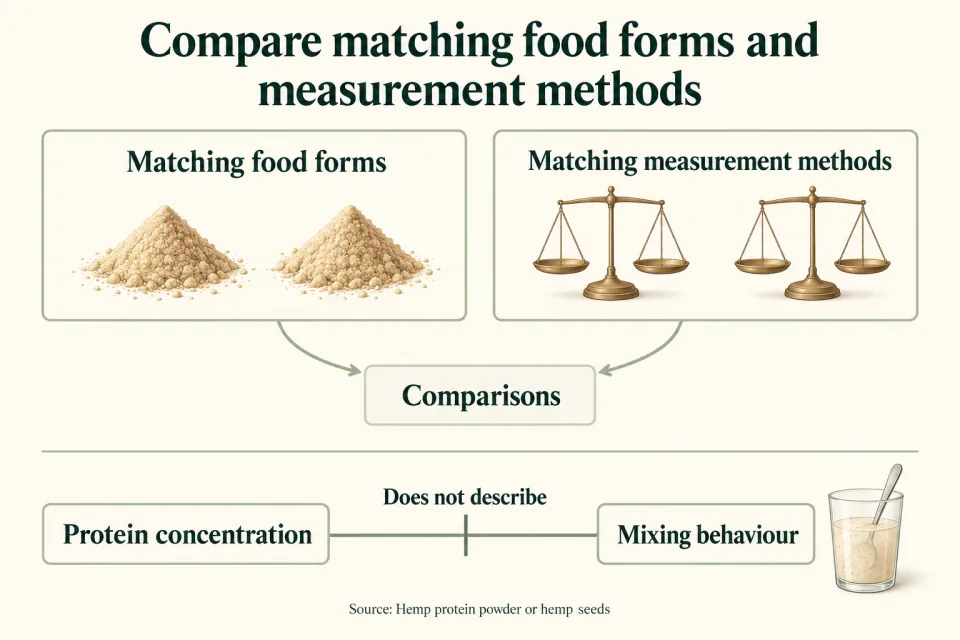
Protein concentration does not describe mixing behaviour
Protein concentration and behaviour in food are separate properties, and the processing studies examined both. Solubility describes how readily protein enters the liquid phase under the conditions being tested. A composition comparison alone does not describe that behaviour.
In the industrial fractionation study, the dry-fractionated proteins were more soluble than their wet-extracted counterparts. They also formed gels at a lower protein concentration under the study’s conditions. Gel formation concerns the way material develops a gel structure, so it answers a different question from how much protein the dry ingredient contains. These findings belong to the tested samples and methods.
The researchers also reported that dry fractionation preserved the proteins’ native assemblies and albumin fraction. Native assemblies are the groupings in which the proteins were originally arranged, while albumin names a protein fraction discussed in the study. This observation connects processing with the form of the protein that remained. It should be read alongside the composition findings, without turning it into a claim about an effect on the body.
The University of Minnesota study provides another comparison of processing and food behaviour. Its researchers made hemp isolates through alkaline extraction followed by isoelectric precipitation, or through salt extraction followed by ultrafiltration. In plain terms, these were different routes for extracting and separating protein. The resulting hemp isolates were compared with soy and pea isolates under specified liquid conditions.
At neutral pH, those hemp isolates had poorer solubility than the soy and pea comparators. Under acidic conditions, their solubility was similar to that of the soy comparator. The change in the comparison shows why a statement about mixing needs its test conditions. Describing hemp protein as simply soluble or insoluble discards the distinction the study measured.
Food applications provide a reason to keep these properties separate. The US FDA lists smoothies, soups, dips, sauces and dressings among intended uses for hempseed-derived ingredients. It also lists baked goods, cereals, desserts and snacks. Those uses concern a range of food forms; the list itself does not establish that every hemp ingredient behaves identically in each application.
For the seeds-or-powder comparison, begin with the intended food form, then read the composition and processing description together. Hulled seeds reflect removal of the coat, pressed meal reflects oil separation, and further-extracted protein reflects additional fractionation. Mixing findings add another layer when the exact ingredient and conditions match. Keeping these distinctions visible gives a more useful comparison than choosing by protein concentration alone.
Notes
Works consulted
- Assessment of nutritional and functional profile of whole, hulled and germinated hemp (Cannabis sativa L.) seeds
- Hemp (Cannabis sativa L.) protein concentrates from wet and dry industrial fractionation: Molecular properties, nutritional composition, and anisotropic structuring
- Hemp (Cannabis sativa L.) protein concentrates from wet and dry industrial fractionation: Molecular properties, nutritional composition, and anisotropic structuring
- Extraction of Protein-Enriched Fractions from Sunflower and Hemp Seeds: Composition and Colloidal Stability of Less Refined Fractions as a Function of Initial pH
- Simultaneous Extraction of Hempseed Oil Bodies and Protein Concentrate Through Mild Phytate-Driven Water-Only Fractionation
- Hemp (Cannabis sativa L.) protein: Impact of extraction method and cultivar on structure, function, and nutritional quality
- FDA Responds to Three GRAS Notices for Hemp Seed-Derived Ingredients for Use in Human Food
From the journal's records
No writer is named: the essay is credited to the journal, Protein Networks.
It cites 7 sources.