 Protein Networks
- Protein Networks
- Chicken breast or thigh for protein during weight loss
An essay
Chicken breast or thigh for protein during weight loss
Compare chicken breast and thigh using matching cooked portions, clear skin descriptions and preparation methods. Learn how to separate the cut itself from the oil, coating and sauce in a dish.
The journal's automated checks of this essay's content and sources passed on , and this version appeared after they did. Read the health disclaimer.
In this essay
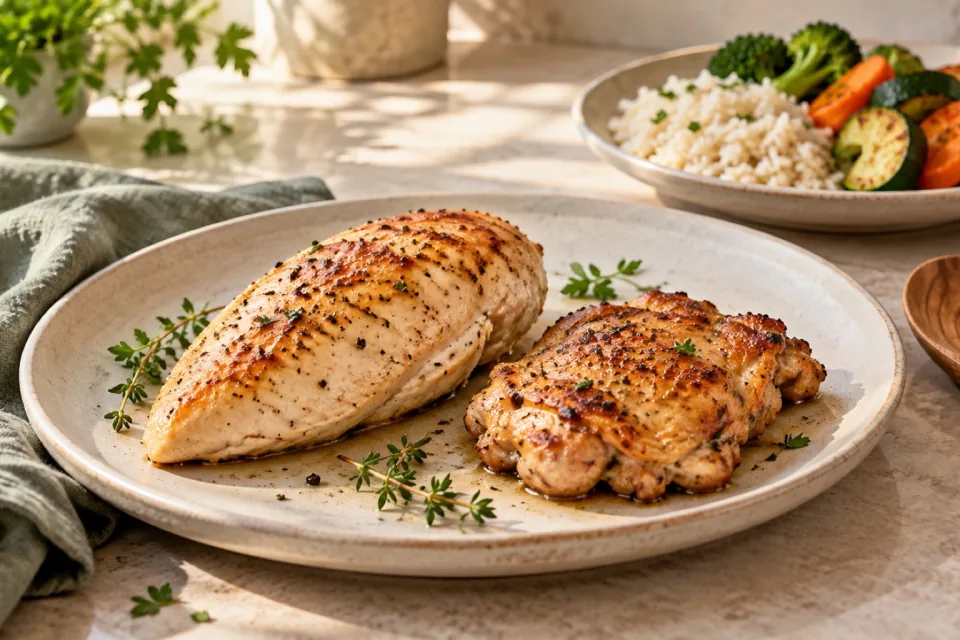
Breast is the lower-fat cut in the comparison
Chicken breast contained less total fat than dark meat in the analysis by Chicken Farmers of Canada. That makes breast the lower-fat option in that comparison. For someone comparing chicken cuts during weight loss, the useful next step is to examine protein and calories using portions prepared and measured on the same basis.
Keep the questions about protein, fat and calories separate. A finding about fat should be described as a finding about fat, without turning it into a protein ranking or a promise about weight. A useful food comparison names the nutrient being compared and the food it describes. The phrase “better for weight loss” leaves both of those details unclear.
The Canadian analysis examined roasted breast and thigh separately, including versions with and without skin. This gives the comparison a specific setting: particular cuts, prepared by roasting, with skin status recorded. Keep that setting attached to the findings when discussing them. Use a separate description for a pan-fried breast, a braised thigh or chicken served beneath a coating or sauce.
The same care applies to the word “portion.” A whole breast and a whole thigh are descriptions of pieces, rather than a shared weight for comparison. To compare the cuts, start with matching weights of cooked edible meat. To describe a meal, use the amount of chicken actually served, with the skin included only when it will be eaten.
This separates choosing a cut from describing a dish. Breast can be selected for the lower fat content reported in the Canadian analysis, while thigh can be assessed in the preparation in which it will be served. Neither decision requires a claim about a future body result. The useful information is the composition of the food, followed by a clear account of how it was prepared.
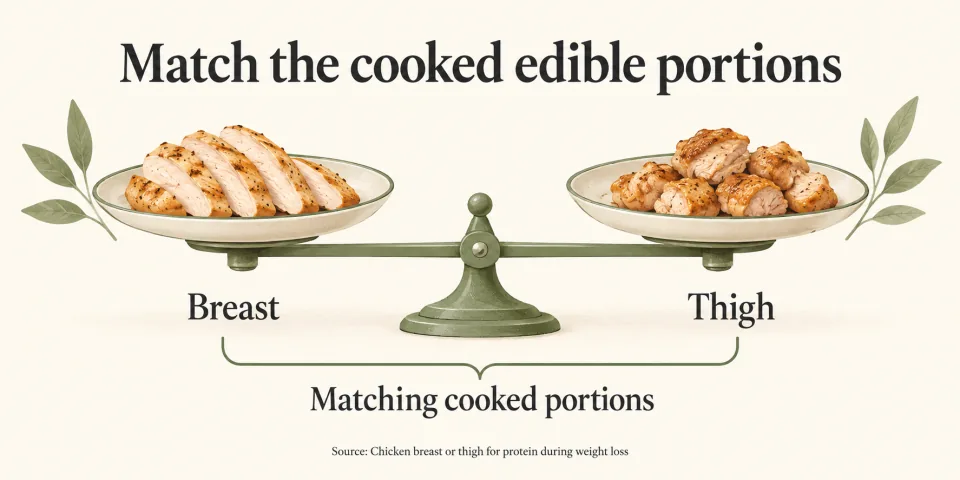
Match the cooked edible portions
A fair comparison starts with equal cooked edible weights and matching preparation descriptions. Here, edible weight means the chicken included in the comparison after bones have been removed, with skin counted according to whether it will be eaten. Write that definition beside the food description before comparing nutrient values.
For a practical example, imagine plain roasted breast beside plain roasted thigh. Remove the bones, set aside any skin that will not be eaten, and weigh matching amounts of the remaining chicken. Label each portion by its cut and skin status. This is a worked method for comparing foods, rather than a suggested serving size or an amount for anyone to eat.
A comparison of whole pieces answers a different question. It describes those particular pieces as served, so keep their individual weights visible rather than presenting them as equivalent portions. If the purpose is to compare the cuts themselves, return to matching cooked weights. If the purpose is to describe dinner, retain the actual serving and describe its contents accurately.
Keep raw and cooked descriptions separate as well. When weighing cooked chicken, select a cooked-food entry; when recording a raw ingredient, retain its raw description. Do not attach a raw-food entry to a cooked portion simply because the cut has the same name. The preparation is part of the food being identified, along with the cut and skin status.
USDA FoodData Central explains that its food composition values reflect particular samples, collection times, locations and methods. Its help page directs users to match the food record to the food being examined, then look at the nutrient values, portion information and how the data were obtained. A record identifier provides a way to return to that particular entry. Keep it with any comparison so that the food description remains traceable.
When entries appear to disagree, compare their descriptions before choosing a value. Read the cut, cooked state, skin wording and preparation, then examine the portion basis and data information. The Canadian report also notes that sampling and method differences limit firm comparisons between its results and the Canadian Nutrient File. Matching the food carefully is therefore part of interpreting a value, rather than an optional detail added afterward.
State when the skin was removed
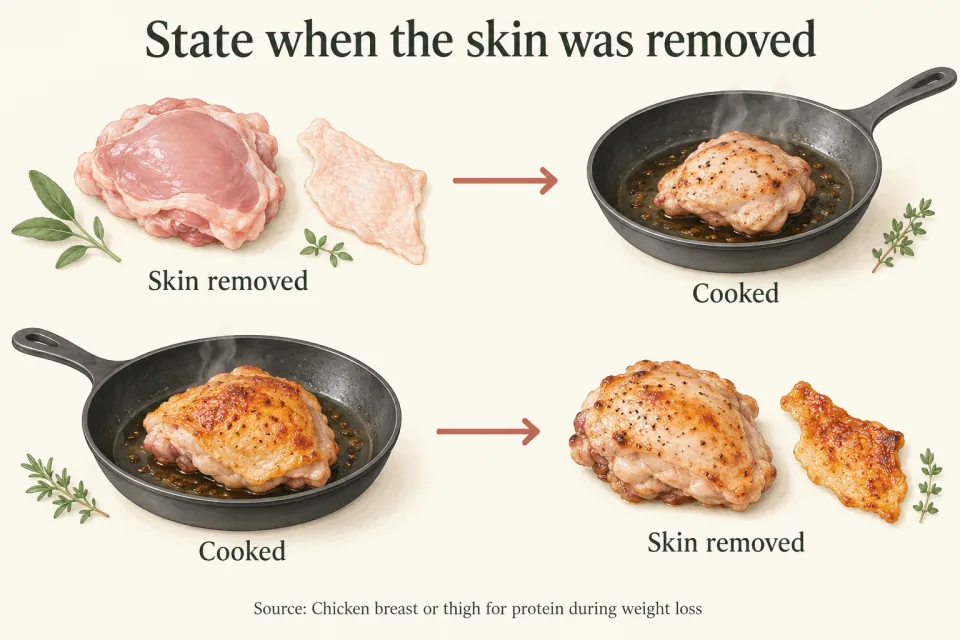
Skin status should describe both the cooking method and what remains on the plate. “Skinless” can be an incomplete description if it leaves the timing of removal unclear. The Canadian analysis listed breast roasted with its skin and stripped afterward separately from breast roasted without skin.
Use wording that preserves this distinction. “Roasted without skin” describes the preparation from the start. “Roasted with skin, then skin removed” records a different sequence. “Roasted meat with skin eaten” describes a serving in which the skin remains part of the edible portion. These descriptions are more useful than a label that says only “chicken breast.”
Consider a breast roasted with its skin and a thigh roasted without it. If the breast skin is removed before serving, record that step explicitly. Then compare matching weights of the cooked edible portions using entries that describe those preparations. Calling the breast skinless at the table should not erase the way it was cooked from the comparison.
A comparison in which skin is eaten on the thigh but removed from the breast asks about the cut and the skin together. That can be appropriate when those are the meals being considered. Label it as a comparison of the prepared servings, however, rather than attributing the entire difference to breast and thigh. To examine the cuts more narrowly, keep skin status alike.
The same distinction helps when adapting a recipe. Record the cut chosen, whether the skin stays on during cooking and whether it is served. If any of those details change, update the food description before carrying nutrient values across. This keeps a change in preparation visible instead of hiding it beneath an unchanged recipe name.
Prepare breast with attention to thickness and added fat
Poaching is a way to cook chicken breast without requiring added fat or oil. Chicken Farmers of Canada describes the method as cooking chicken submerged in liquid. It also lists baking, pan-frying and grilling as ways to prepare breast, so a comparison should name the method rather than stopping at the cut.
For a poached preparation, begin the food description with the breast and its skin status, then record the cooking liquid and anything served with the meat. Keep a sauce or dressing visible in the description instead of folding it into the word “poached.” When comparing a poached breast with a prepared thigh dish, describe the preparation of the thigh with the same care.
Chicken Farmers of Canada suggests cutting breast lengthways and pounding the pieces to an even thickness for more even cooking. This provides a practical preparation step before choosing how to cook the pieces. Lay out the portions and compare their thickness, rather than relying only on how similar they look in overall size. An even shape also gives the recipe a clearer starting point.
Bone and skin affect preparation too. Chicken Farmers of Canada notes that bone-in breasts with skin generally take longer to cook than boneless breasts without skin. Keep those details attached to cooking instructions when adapting a recipe. A method written for a boneless piece should not be copied unchanged simply because the replacement is also breast meat.
Poached chicken can be shredded for sandwiches, salads or tacos, according to Chicken Farmers of Canada. These offer different ways to serve the same preparation. In a sandwich, describe the chicken separately from the bread and spread; in a salad, keep the dressing visible; in a taco, distinguish the filling from the tortilla and toppings. This makes the chicken comparison usable across dishes without presenting each complete meal as though it were plain meat.
In guidance for the general population, the World Health Organization includes steaming or boiling instead of frying among ways to reduce dietary fat. It also includes choosing lean meat and trimming visible fat in that guidance. These are general preparation options, rather than a personal intake target. For the breast-and-thigh comparison, use them to describe what was done to the food and keep any added oil in the recipe record.
Separate browning, tenderness and cooking temperature
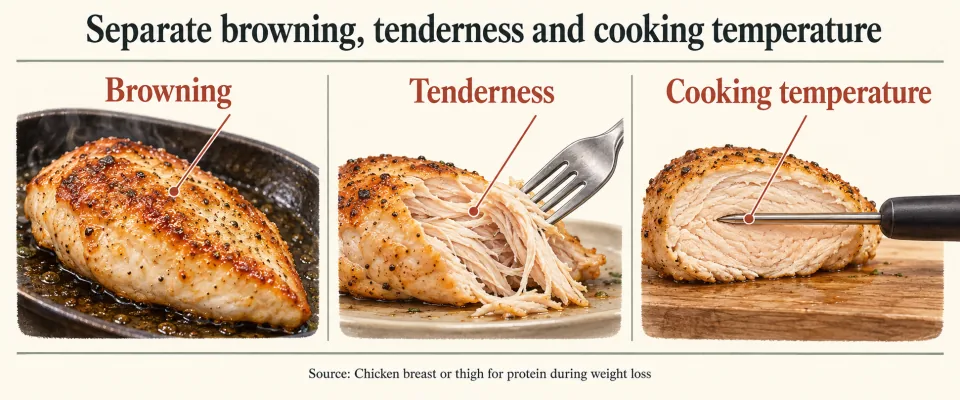
Browning adds flavor, but it does not seal juices inside chicken. The Exploratorium explains that browning develops flavor through reactions between sugars and proteins, called the Maillard reaction. This is a reason to distinguish the purpose of the browning stage from the cooking that follows it.
Braising typically begins with browning and continues with moist heat in a covered vessel over an extended cooking period. When describing a braised thigh, record the browning stage, any added fat and the liquid or sauce served with it. This gives the preparation enough detail to compare with a plain roasted cut. Calling both foods “cooked chicken” would leave the recipe differences out of the description.
For small pieces, the Exploratorium describes browning in batches to help keep them from steaming during that stage. The practical sequence is to brown a batch, move it aside and continue with the remaining pieces before proceeding with the moist cooking. Keep browning and the later covered cooking as distinct steps in the recipe. Each step has a different role in the method.
Moist cooking also changes collagen, a component of the meat, into gelatin, allowing the meat fibers to separate more readily. Yet cooking in liquid does not rule out a dry result. The Exploratorium explains that overcooked meat can taste dry even while surrounded by liquid. Adding more liquid should therefore not be described as a guarantee of tender meat.
The US government’s food safety cooking chart gives the same minimum internal temperature for chicken breast and thigh: 165°F (74°C), checked with a food thermometer. Keep that temperature check separate from decisions about browning or how a sauce looks. A recipe can describe its texture and flavor goals while still giving the temperature check its own place.
For the nutrition comparison, retain the finished dish’s full description after cooking. A thigh served in its braising sauce and a drained piece of plain poached breast are different preparations, even when their edible chicken weights match. Compare the plain meats when the question concerns the cuts, or compare the complete preparations when the question concerns the dishes.
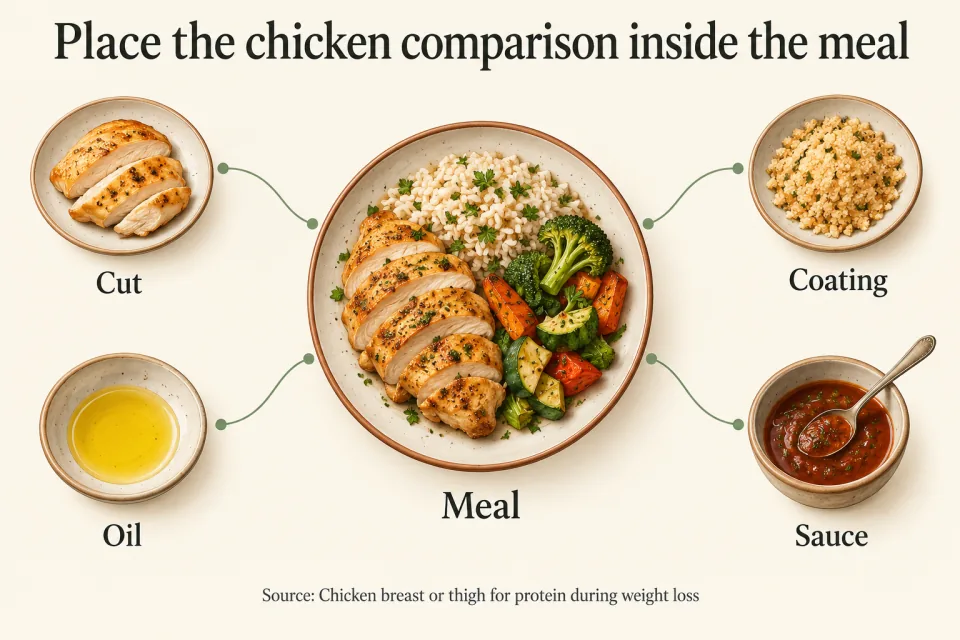
Place the chicken comparison inside the meal
Compare the chicken separately from the rest of the meal, then describe the meal as a whole. This keeps a finding about breast or thigh attached to the meat it concerns. It also makes room for the staple food, vegetables, legumes and sauce without assigning their contribution to the chicken cut.
The World Health Organization describes fats and oils as concentrated sources of energy in its guidance for the general population. When examining calories in a chicken dish, keep added oil and other recipe ingredients visible alongside the meat. “Breast” or “thigh” alone is not a complete recipe description. Record what went into the dish and what was served with it before comparing finished meals.
In its general population guidance, the World Health Organization recommends dietary combinations that include staple foods, legumes, vegetables, fruit and animal-source foods. This allows the chicken comparison to sit within many food traditions. For example, a meal description might place chicken beside rice and dal, the pulse dish common in Indian cooking, or beside beans and a grain. These are examples of how to describe a meal, rather than portions for anyone to follow.
Use the same approach for a chicken sandwich, salad or taco. Identify the prepared chicken first, then the accompanying foods and any dressing or sauce. When changing breast to thigh in a recipe, keep the other ingredients alike if the purpose is to examine the cut. When changing the whole recipe, describe the whole change instead of crediting the cut with every difference.
The World Health Organization’s guidance for the general population also describes protein as coming from a mixture of animal and plant sources. Its account of dietary diversity includes variety within food groups as well as across them. A comparison of chicken cuts can therefore remain a focused food question without making chicken the only protein food under consideration.
For a practical decision, return to the specific food being served. Breast was lower in fat than dark meat in the Canadian analysis; the next details to establish are cooked edible weight, skin status and preparation. Keep protein and calorie comparisons tied to matching food records, and keep sauces and other ingredients attached to the dish they belong to. That produces a comparison someone can use without turning a food value into a personal target.
Notes
Works consulted
From the journal's records
No writer is named: the essay is credited to the journal, Protein Networks.
It cites 9 sources.