 Protein Networks
- Protein Networks
- Are nutritional yeast flakes useful for protein?
An essay
Are nutritional yeast flakes useful for protein?
Nutritional yeast contributes protein, but the amount used in cooking matters. Learn how to read serving information, separate protein from added vitamins, and judge its role in a dish.
The journal's automated checks of this essay's content and sources passed on , and this version appeared after they did. Read the health disclaimer.
In this essay
Protein in a seasoning portion
Nutritional yeast flakes contribute protein, but their usual role as a seasoning limits how much they contribute to a dish. Good Food makes this portion distinction central to its assessment: the small quantities normally eaten matter when judging nutritional yeast as a protein source.
The useful starting point is the amount of flakes in the food being eaten. A description of a dry ingredient as rich in protein leaves that practical question open. A sprinkling on pasta and yeast mixed throughout a filling are different uses, and the amount assigned to a portion depends on how the dish is prepared and divided. The ingredient's composition alone does not describe the finished meal.
Nutritional yeast is a complete protein, meaning that it contains all essential amino acids, the components referred to in that description of protein. This tells us about the composition of its protein. It does not establish how much protein a topping contributes. The word complete therefore answers a different question from whether a culinary portion makes a substantial contribution.
A food can also have a useful culinary role without being the central protein ingredient. Food Hero, a food education resource from Oregon State University in the United States, illustrates this in its tofu enchiladas. Its recipe identifies tofu as a protein source and includes nutritional yeast in the filling. The yeast belongs in the assessment, but so do the other ingredients.
For someone interested mainly in protein, the most informative description would connect the amount of yeast used with the protein contained in that amount. For someone interested in cooking, flavor and the way the flakes fit a recipe are separate considerations. Keeping those questions distinct makes it easier to judge a seasoning without expecting the same role from every ingredient on the plate.
That distinction also keeps optional added vitamins in their proper place. A vitamin statement describes vitamin content; it does not answer the question about protein in the flakes used for a meal.
Which kind of yeast the flakes contain
Nutritional yeast is an inactive fungus grown for use as food. Harvard Health Publishing identifies it as Saccharomyces cerevisiae, while UMass Chan Medical School explains that nutritional yeast is cultivated specifically for eating. Nutritional yeast is available as dried flakes, granules and powder.
The word yeast covers ingredients with different culinary jobs. UMass explains that baker's yeast is alive when it is used to raise bread, although baking kills it. Nutritional yeast has already been made inactive through heating. Harvard explains that inactive nutritional yeast cannot raise bread dough or carry out the fermentation used in brewing beer.
UMass describes growing the yeast cells on a medium rich in sugar, such as molasses. It also distinguishes nutritional yeast from the dead brewer's yeast left after brewing, which has a bitter taste. Sharing a species does not make these ingredients equivalent in a recipe. Their preparation and intended culinary roles help explain why the name on a food record matters.
Whole-cell nutritional yeast also differs from yeast extract. The supplied reference on nutritional yeast describes the flakes as containing inactive whole cells, including components that dissolve in water and components that do not. Yeast extract involves separating and concentrating the components that dissolve in water. An entry for yeast extract therefore describes a different food from whole-cell flakes.
These distinctions are useful when reading a nutrition table. The entry needs to identify the ingredient being assessed: nutritional yeast flakes used as food. A figure attached to baker's yeast, brewer's yeast or yeast extract answers a question about that named ingredient. The shared word yeast is not enough to connect the figure to a packet of nutritional yeast.
The form deserves attention too. Flakes, granules and powder are ways nutritional yeast is supplied, but a stated serving still belongs to the food and form described on its label. Recording the serving weight alongside the name keeps the comparison attached to a defined amount, rather than to a broad ingredient category.
How to read the portion information
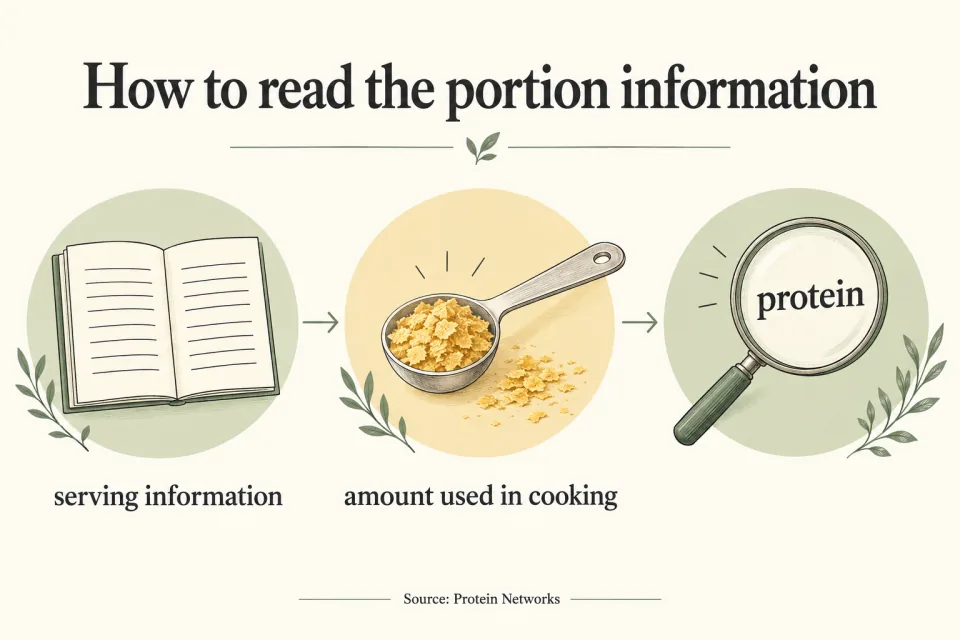
Read the serving size together with the protein entry, because the nutrient amounts on a label refer to the stated serving. The FDA explains this relationship for American Nutrition Facts labels. Its explanation is useful here as a method for reading a label, rather than as a protein figure for nutritional yeast.
On U.S. labels, the serving size appears as a household measure followed by a metric amount, such as grams. Read those details together. The household measure describes the portion in familiar kitchen terms, while the weight identifies the amount of food behind the nutrient entries. A spoon measure copied without its accompanying weight leaves out part of the label's description.
The FDA explains that a labeled serving reflects typical consumption rather than an instruction about how much to eat. A serving statement can therefore be used to interpret the label without turning it into a personal target. The practical task is to connect the portion described on the label with the amount included in the dish.
Start by identifying what the protein figure belongs to: the label serving, a stated weight of food, or an entire recipe. Then identify the amount of yeast used in the recipe and how that recipe is shared. These are separate pieces of information. Reading a whole-recipe quantity as though it belonged to each plate would assign the full batch of yeast to every portion.
A percentage by weight and a serving amount also answer different questions. The percentage describes protein relative to the weight of the ingredient. The serving information describes an amount of the ingredient used as the basis for its nutrient figures. Neither becomes an account of a meal until the quantity used in that meal is identified.
Comparisons need the same care. The FDA advises using matching serving sizes when comparing foods by their percent Daily Values. An equal-weight comparison can describe composition, while a comparison of stated culinary portions can describe different uses in a meal. Keep the basis visible instead of moving between those comparisons as though they answer the same question. A topping, a sauce and a filling should each be assessed in the portion actually being discussed.
What shared recipes reveal about the amount
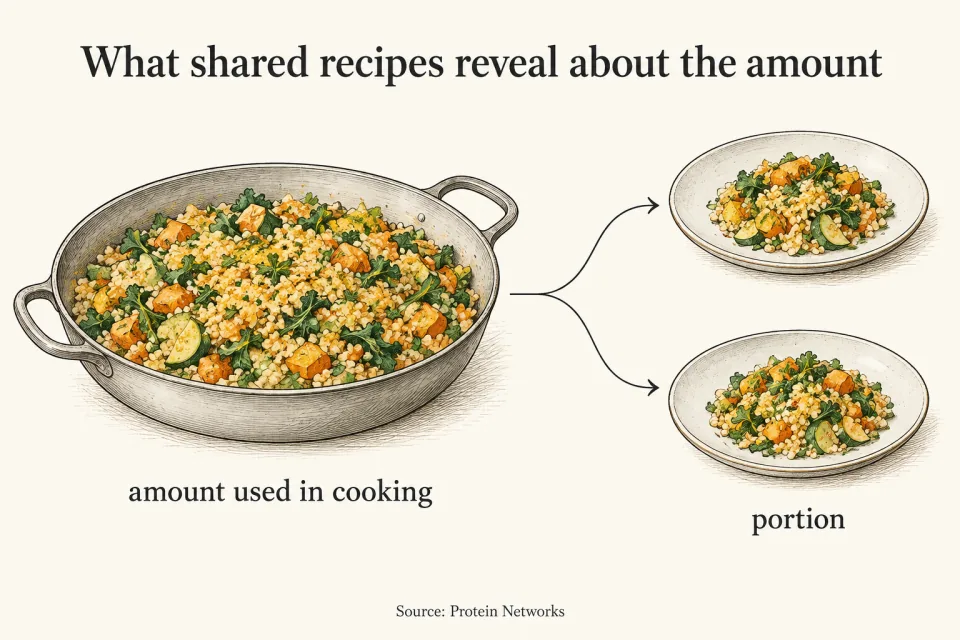
A shared recipe makes the difference between a batch quantity and a plate quantity visible. Food Hero's tofu enchiladas and its tofu variation on skillet eggs place nutritional yeast inside mixed dishes. They provide useful examples of how to trace an ingredient through a recipe without attributing the whole dish's protein to it.
Food Hero's enchilada recipe distributes half a cup of fortified nutritional yeast across a dish yielding eight pieces. That is a quantity for the recipe as a whole. The flakes are part of the filling that is distributed among the enchiladas, so the recipe amount should stay attached to the batch when describing it. The word fortified identifies an additional feature of the yeast; it does not change what the batch quantity refers to.
The preparation also shows the yeast's place among the ingredients. The instructions drain, press and crumble extra-firm tofu before adding nutritional yeast. Onion powder, garlic powder, basil and optional red pepper flakes join the filling. Food Hero identifies tofu as a protein source and describes mushrooms as contributing texture and umami, the savory taste associated with the dish.
This gives a practical way to read a mixed recipe. Identify the ingredient being assessed, follow where it enters the dish, and keep its quantity separate from the quantities of the other ingredients. The fact that nutritional yeast is present does not assign the tofu's contribution to the yeast. Equally, calling the yeast a seasoning does not mean omitting it from an ingredient account.
Food Hero's skillet variation combines a 14-to-16-ounce package of tofu with two tablespoons of nutritional yeast and a quarter teaspoon of turmeric. Here again, the yeast amount describes the mixture prepared from the recipe. The instructions stir the seasoned tofu into vegetables and then heat it. The recipe therefore supplies another example of yeast incorporated into a larger food mixture, rather than a stand-alone portion of flakes.
The examples also show why the name of a finished dish is insufficient for a protein comparison. A tofu filling contains several ingredients, and its composition cannot be assigned to whichever seasoning attracts attention. For a useful account, retain the recipe's ingredient amounts and distinguish the batch from the served portion. That method applies equally to a filling, a skillet mixture or a sauce shared across plates.
Added vitamins are separate from protein
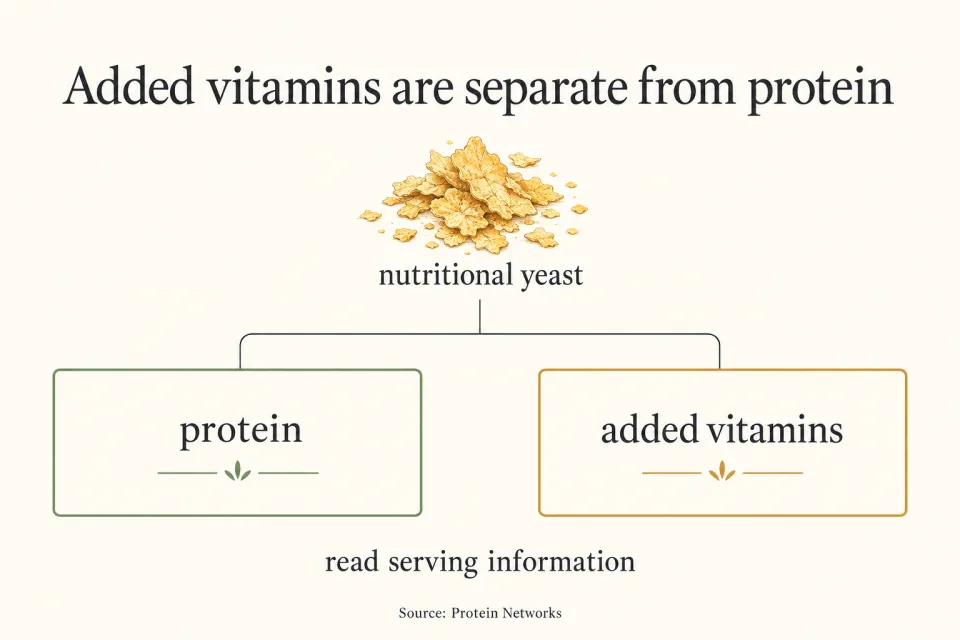
Vitamin fortification describes added vitamins, not the amount of protein in a serving of nutritional yeast. The World Health Organization defines food fortification as deliberately increasing the vitamins or minerals in a food or condiment. This definition keeps the meaning of fortified specific, rather than making it a general statement about every nutrient.
Nutritional yeast comes in fortified forms and forms without added nutrients. Fortified yeast contains additions alongside nutrients already present in the food. Nonfortified yeast lacks those additions. These descriptions identify a difference in how the food is prepared, but they do not supply a numerical comparison of protein between the forms.
Harvard lists niacin, thiamin, riboflavin and folate among the vitamins that may be added to nutritional yeast. The phrase may be added matters: a description of possible fortification is not a statement that every packet contains the same additions. The vitamin information needs to remain attached to the particular food being described, just as the serving information does.
Harvard states that nutritional yeast without fortification contains no vitamin B12. The reference on nutritional yeast explains that vitamin B12 used in fortification is made separately and then added to the yeast. These facts explain why vitamin content and the underlying yeast should be considered separately. A statement about an added vitamin does not establish the protein content of the culinary portion.
A clear reading of the label therefore follows each question to its own information. The serving statement defines the amount of food behind the nutrient entries. The protein entry concerns protein in that amount, while the vitamin information describes the vitamins declared for it. A prominent vitamin message on the packet does not answer the protein question elsewhere on the label.
The same distinction applies to the enchilada example. Food Hero specifies fortified yeast, but that wording alone gives no protein amount for the filling or for a piece of the finished dish. Fortification, recipe quantity and the contributions of other ingredients remain separate parts of the description. Keeping them separate avoids turning a vitamin feature into an unsupported protein comparison.
Where the flakes fit in everyday cooking
Nutritional yeast fits most clearly into cooking as a savory seasoning that also contributes protein. Good Food describes it as ready to use as a topping, with no preparation needed. Its examples include sprinkling the flakes over roasted vegetables, salads or pasta for a flavor reminiscent of Parmesan.
Harvard connects the savory flavor with glutamic acid released from the inactive yeast cells. This helps explain the culinary interest in the flakes without making a claim about a bodily benefit. Good Food cautions that nutritional yeast's strong flavor can overpower other ingredients. Flavor therefore belongs in the decision about how a recipe uses it, alongside the portion information relevant to protein.
Its uses extend beyond dry toppings. Good Food describes incorporating nutritional yeast into vegetarian or vegan soups and stews during cooking. Harvard notes that it can help thicken soup. In that setting, the yeast has a role in the texture of a shared dish as well as its flavor, and the quantity remains part of the whole recipe.
Sauces offer another use. Nutritional yeast can flavor a cheese-style sauce for broccoli, baked potatoes and other vegetables. Harvard also describes replacing Parmesan with nutritional yeast in vegan pesto. These are culinary substitutions: they describe how an ingredient can work in a recipe, without establishing that the substituted foods contain matching nutrient amounts.
Food Hero suggests nutritional yeast as a topping for rice and beans. Alongside its tofu recipes, that example places the flakes in familiar meals rather than making them the whole meal. It also gives the protein question a concrete setting: assess the yeast added to the rice and beans, while keeping the rest of the dish in the account.
Good Food recommends keeping nutritional yeast well sealed in a cool, dry, dark place. From storage to the finished plate, its practical identity remains that of a cooking ingredient. The most useful assessment connects that use with a defined portion: what food the flakes are, how much enters the recipe, and what the serving information describes. Added vitamins and complete-protein wording can then be read for what they establish, without letting either stand in for the amount of protein contributed by a seasoning.
From the journal's records
No writer is named: the essay is credited to the journal, Protein Networks.
It cites 9 sources.
Notes
Works consulted
- Nutritional yeast: Does this savory, vegan seasoning pack a nutritional punch?
- 4 Ways Nutritional Yeast Is Good for You
- Nutritional yeast
- Nutritional Yeast – Nourishing or No-Go?
- Nutritional yeast
- Food fortification
- How to Understand and Use the Nutrition Facts Label
- Vegetarian Tofu Enchiladas
- Veggie Skillet Eggs